Sunday 6th September
Saturday was a very pleasant day with light winds and plentiful sunshine, that was very strong in the afternoon resulting in a maximum of 22.0C at 16.31. This high was 3.0C above my September average. The thermometer hovered around 12C for most of the night with a minimum of 11.9C at 04.50, being 1.7C above average. The flow of warm air,
plus a fragmented area of cloud, passed over our area in the early hours, moving northeastwards, that triggered the automatic rain gauge at 04.50 with just 0.2mm of precipitation. This was the reason why the temperature did not fall away significantly before dawn.
Initially the sunshine was weak on Sunday morning as it struggled to break through, and then rise above, cloud on the eastern horizon, but was shining strongly after 07.30 that had lifted the temperature to 14.5C by 08.00.
The relocation of the high pressure further east, over Central Europe, has resulted in the air stream over the past twelve hours backing from west yesterday to south and now southeast. The light breeze coming from this direction will draw warm air across the country from the near Continent that will see the thermometer rise well above average today, in fact it is likely to be a very warm day.
It will be all change from Monday as tonight and tomorrow morning a cold front will traverse the country bringing with it much cloud, which will mean sunny intervals, not sustained sunshine as today. The new week will see the depression to the north become dominant with the air stream veering back into the west or southwest bringing an air stream from the Atlantic, this will mean days with sunny intervals and maxima around the September average.
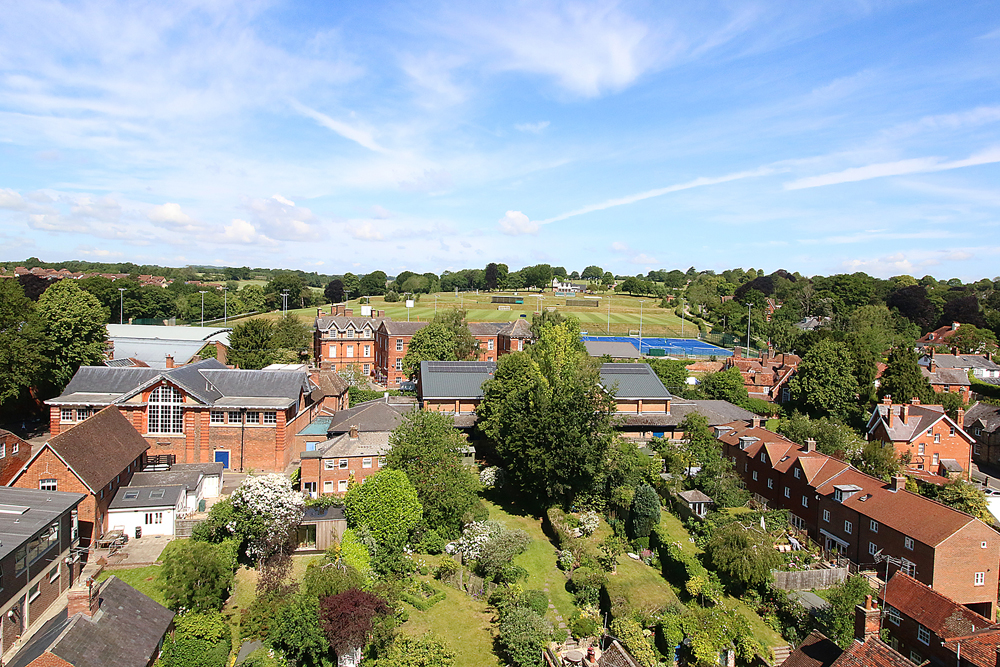
The image is from St Peter’s Church Tower looking north, taken severel years ago, before recent developments.
When does Autumn start?
Author: Met Office
Wed, 02 Sep 2026
As summer draws to a close and the first signs of changing leaves begin to appear, many people start asking the same question: when does autumn actually begin?
The answer depends on which definition you use.
While some people consider autumn to begin on 1 September, others wait until later in the month. Both approaches are correct, but they are based on different ways of defining the seasons.
Autumn: a season of transition
Autumn is the transition season between summer and winter. It is often associated with cooler temperatures, harvest time and the gradual transformation of the landscape as leaves turn shades of yellow, orange, red and brown.
Across the UK, autumn can bring a striking change in weather patterns. Warm spells are still possible, particularly during September, but temperatures generally begin to decline as the season progresses. At the same time, daylight hours shorten and the likelihood of wetter and windier weather increases.
When does meteorological autumn begin?
Meteorological autumn always begins on 1 September and ends on 30 November. This definition divides the year into four fixed seasons, each lasting three complete calendar months. Autumn therefore consists of September, October and November.
Meteorologists use this system because it aligns neatly with annual temperature cycles and makes it easier to compare weather and climate statistics between different years and seasons. Using fixed dates provides consistency when analysing long-term climate records and producing seasonal summaries.
For this reason, the Met Office and other meteorological organisations use the meteorological definition when discussing seasonal weather and climate.