Tuesday 28th July
The temperature began climbing higher again on Monday as the afternoon progressed reaching a peak of 25.9C at 16.39, being 3.0C above my long-term July average. The past night was exceptional in that there was little variation in temperature as the thermometer hovered around 18C for much of the night with a minimum of 17.6C at 05.36, which was a significant 5.6C above the July average and made it the warmest night of the month. This situation was due to much thick cloud that came and went during the early hours, never completely dispersing, with no prolonged clear period, thus minimising any loss of warmth into the atmosphere.
Tuesday began gloomy under cover of the continuing thick cloud with little air movement. The Azores high has continued to build back across the UK thus minimising the pressure gradient it is also keeping weather fronts at bay associated with the depression to the north.
We have a couple of hot days ahead, that is when the sun burns back the cloud this morning, with temperatures likely to exceed the heatwave threshold on Tuesday and Wednesday under a light breeze from the southwest. By Thursday and onwards temperatures will drop back a few degrees, but still be above average, as the wind veers into a more westerly direction thus cutting off the heat arriving from the Continent.
The forecast track of the jet steam indicates that is likely to become fragmented early next week thus cutting the UK off from the heat to the south with more variable, cooler weather, there is also the possibility of some precipitation as the winds arrive with a more easterly and perhaps northeasterly component.
The full moon for July appears today and tomorrow and is called the Buck moon.
Why is it called the Buck Moon?
The Buck Moon gets its name from the time of year when male deer, known as bucks, begin rapidly growing a fresh set of antlers.
The tradition of naming full moons dates back centuries, with different cultures using them to mark the changing seasons and keep track of the year.
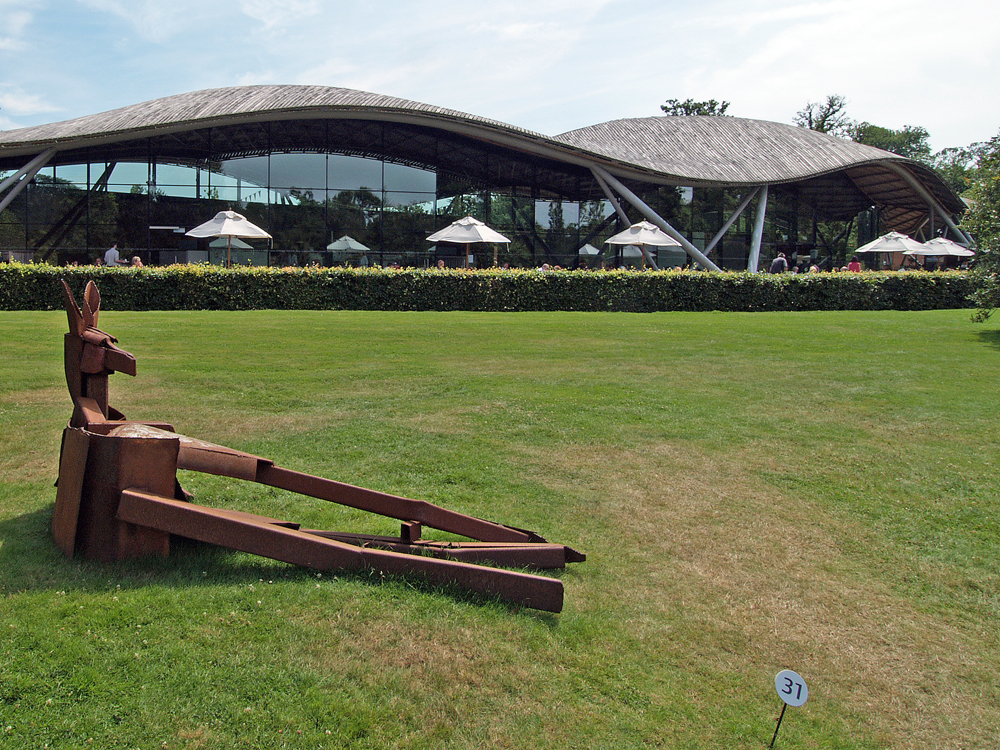
The images for the next few days will be from the summer display at the Saville Garden
The Savill Garden
We will arrive through the new entrance, known as the Savill Building, that was built and then opened by the Duke of Edinburgh in 2006.
Set across 35 acres of beautifully designed gardens, woodland and ever changing seasonal displays, The Savill Garden is a peaceful retreat in the heart of Windsor Great Park. Commissioned by King George V and created by renowned horticulturist Eric Savill in 1932, the Garden has been inspiring nature lovers, photographers, friends and families for generations.
It first opened to paying visitors in 1953. The garden can be enjoyed throughout the seasons.