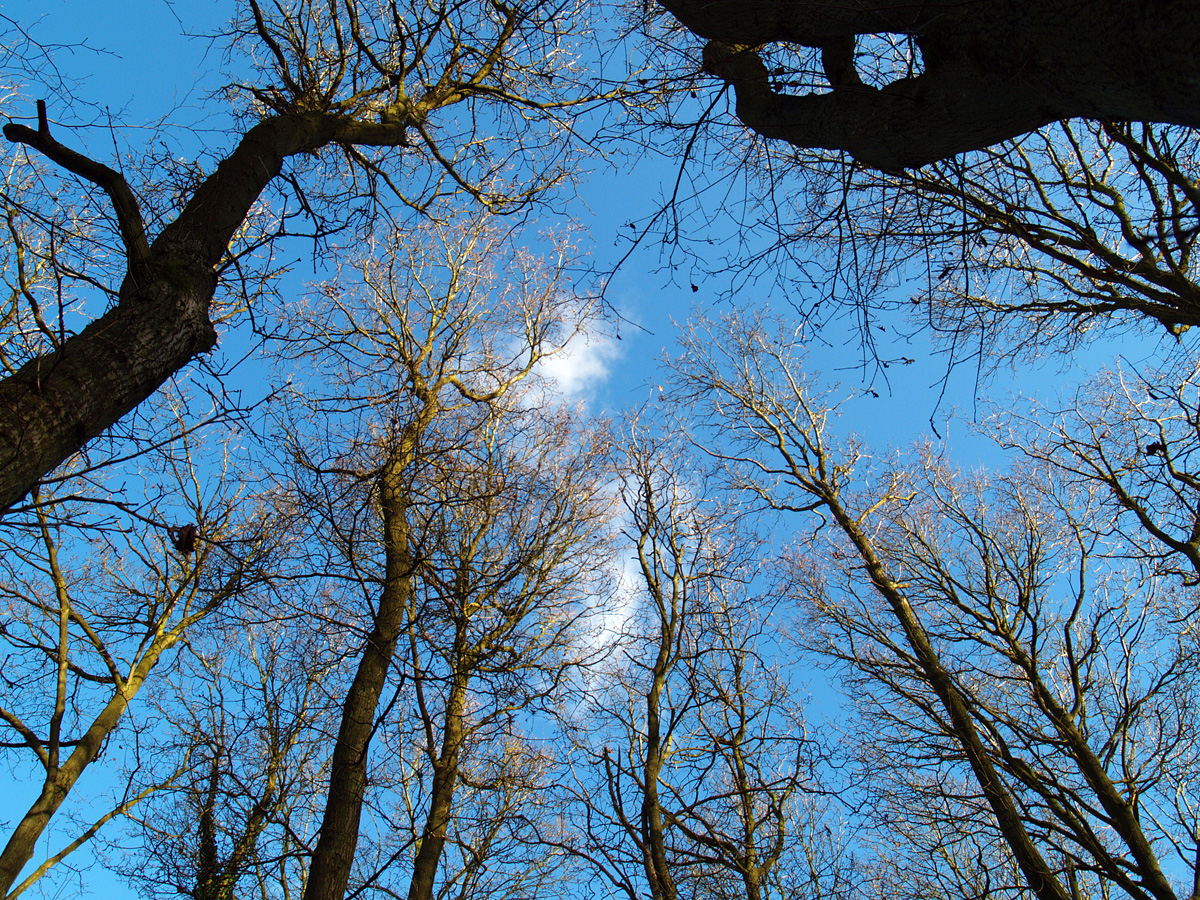
Thursday 1st January – HAPPY NEW YEAR!
The freezing fog on Wednesday took until 12.00 before there was any significant thinning as the air temperature stayed below zero until 12.38, when the sun broke through and shone weakly. The maximum of 2.2C was logged at 13.41 being a significant 5.3C below average. The flow of Arctic air meant the thermometer dropped below zero at 17.13 to reach minimum of -1.2C at 20.27, before starting to rise again, the temporary very light breeze from the west contributed to a change in the temperature trend. This was most unusual as under clear skies the temperature tends to drop until the early hours.
Christmas Day began with just thin, high cloud and weak sunshine that had lifted the temperature to 0.6C by 08.00. It was a treat to have a bright start to the new day after the numerous gloomy early mornings in December.
The evenings have already seen an increase of 10 minutes since the shortest day, however the morning sunrise in Marlborough has been at 08.12 since the 26th. We will have to wait a few more days until the mornings begin to begin to arrive earlier.
We are now firmly under the influence of the deep low pressure centred over Scandinavia that will edge towards Eastern Europe over the next few days. This will result in the wind circulating anticlockwise, as they do around depressions, dragging the Arctic Air down across the country. The old anticyclone will now begin to throw a ridge of high pressure across the UK, currently centred near Iceland, that will minimise any precipitation and produce the clear skies. The next week is likely to produce maxima well below average and under clear skies, several nights with a sharp air frost, the compensation is likely to be modest amounts of sunshine.
A Yellow Weather Warning was posted by the Met Office at 11.48, for snow and ice that now extends to our area, from midnight to noon on Friday. There is the possibility of two narrow bands of precipitation arriving about 06.00.
Weather Review for December 2025
The month began where November finished with a flow of warm, moist air from the Atlantic. This resulted in maxima well above average, sometimes occurring at night, as the weather fronts crossed the area. It was also a very wet period with substantial falls on several days, 14.6mm on the 1st made it the wettest day for almost a month.
The second week was very little different with a south-westerly airflow producing temperatures well above average, except for a light frost early on the 13th under clear skies. The rainfall amounts were, however, minimal compared to the first week.
Interestingly, the depth of water in the River Kennet at Winterborne Monkton, close to where the springs rise for the start of the river, started to flow on December 1st before stopping on the 4th at 16.15 when the gauge indicated no depth of water. The gauge then indicated that a flow of water began again on the 5th December at 07.15 and has continued to indicate a level since that time although variable, the highest of 0.19m was logged on the 6th at 04.45. The highs and lows obviously correlate with the wet spells this month. During the drier second week the water level once again fell to zero, logged on the 11th at 23.30.
The unsettled weather that brought the warm moist air continued until just before Christmas. A minor depression formed off the coast of Btittany on the 21st that produced a significant shift in wind direction. For almost the whole month, so far, we have had an air flow from a south-westerly quadrant. Initially, the wind from the east, usually a cold direction, brought the air mass from the eastern Atlantic, with day and night temperatures still above average.
There was a significant change in our weather pattern on the 23rd. The recent depression had begun to head towards the Mediterranean allowing a high-pressure system, that had been building over Scandinavia, to edge over the UK. This resulted in the wind backing further, into the northeast, and that began a flow of much cooler and drier air. There was also a considerable pressure gradient between the two systems that resulted in the wind strength increasing, a maximum gust of 30mph was logged on the 25th. However, this flow of strong, cold air produced a wind chill, which meant outside it felt much colder than that indicated on thermometer.
Up to and including the 22nd every daily maximum temperature was above average, whilst 17 of the minima in December were above average. Up to and including the 23rd, the average maximum was 2.9C above average and the average minimum was 2.6C above average.
The month ended with a mainly gloomy, dull, dry and cool week as maximum temperatures dropped below average due to a persistent northeasterly breeze with little sunshine. On the 30th the wind began to back into the north heralding a much colder period of Arctic air streaming down from the north.
The coldest night of the month occurred in the early hours of the 31st with a minimum of -3.8C.
December had a mean temperature 1.2C above my long-term average whilst the rainfall of 124.4mm was 134% of my 42-year record or + 31.3mm.
Interesting facts for 2025
Coldest Night: -7.5C on 11th January Coldest Day: 0.8C on 4th & 8th January
Hottest Day: 32.9C on 11th July Hottest Night: 18.5C on 1st July
Heatwave: 3 consecutive days equal to or above 27C for Wiltshire: 9th – 13th July
Wettest Day: 25.7mm on 14th November
Longest dry period: 14 days 12th – 25th August
Warmest soil temperature at a depth of 5cm: 27.0C on 12th July
Air Frosts: 40
Highest Solar: 1257 W/m2 on 29th June
Highest Barometric Pressure: 1044.7mb on 6th February
Lowest Barometric Pressure: 971.0mb on 6th January